Classic dishes for modern cooks
883 classic Soviet home-cooking recipes inspired by The Book of Tasty and Healthy Food, a Soviet cookbook first published in 1939. My family owned a mid-1950s copy before I was born, and we still have it. I wrote each recipe in my own words. Each one has a list of ingredients, short numbered steps, amounts you can scale, and conversions from the old glass-and-spoon measures to US and metric.
A few of our favorites
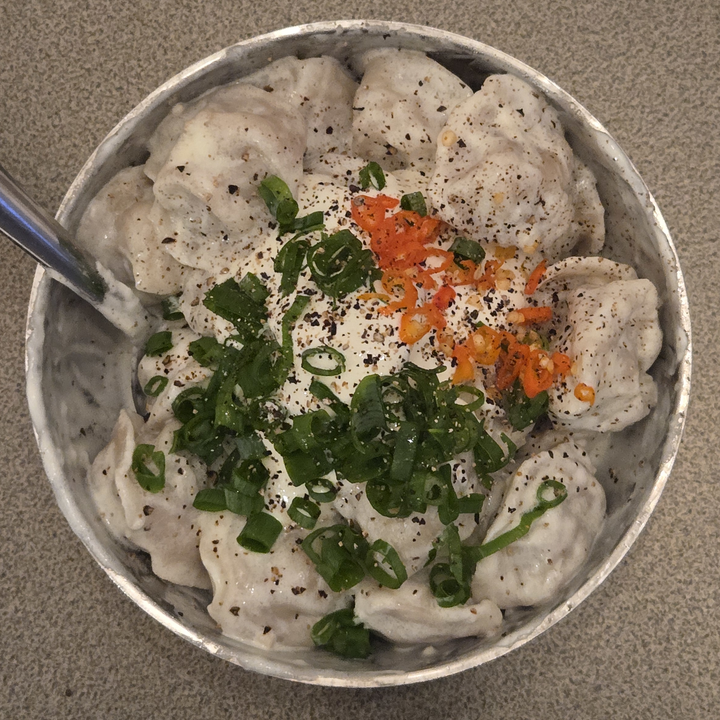
Pork-and-meat pelmeni boiled briefly and served with butter or sour cream, or with a sharp mustard and vinegar sauce. They can also be parboiled and fried until crisp.
- 9 ingredients
- 4 steps
- cooking
- Chapter and section: Meat, Products from Minced Meat
A rich beet and cabbage soup on meat broth, with potatoes, tomato and a finish of garlic pounded with pork fat. Serve each bowl with sour cream and parsley.
- 18 ingredients
- 8 steps
- cooking
- Chapter and section: Broths and Soups, Dressed Soups
Rice steamed over seared lamb, onion and carrot in one heavy pot until every grain is separate and rich with the fat. A generous one-pot main course for a family meal.
- 8 ingredients
- 8 steps
- cooking
- Chapter and section: Grain and Flour Dishes, Milk Porridges
A crystal-clear Russian fish broth made from freshwater fish and root vegetables, then clarified with pounded fish roe. Serve it in bowls with a piece of the poached fish and a fish pie on the side.
- 8 ingredients
- 8 steps
- cooking
- Chapter and section: Broths and Soups, Clear Soups
Kebab (Shashlyk)
Diet: Keto
Cubes of lamb marinated with onion and vinegar, skewered with onion slices and grilled over coals, then finished with butter, green onions, tomatoes and lemon. The classic Caucasian skewer for a backyard fire.
- 8 ingredients
- 6 steps
- cooking
- Chapter and section: Meat, Fried Meat
Small oval hand pies of soft yeast dough wrapped around a savory or sweet filling, glazed with egg and baked until golden. Good for lunch boxes, picnics or alongside a bowl of soup.
- 4 ingredients
- 8 steps
- cooking
- Chapter: Dough Products
Browse by what’s on the plate
Explore Soviet recipes by food group
The ingredients of our modern recipes, sorted into the five MyPlate (external) food groups. Butter, cream and sour cream count as fats; dry beans, peas and lentils count as vegetables and protein.
45852% of recipes
26230% of recipes
43349% of recipes
55062% of recipes
Dairy recipes
Syrniki of Cottage Cheese with Potato,Tvorog (Curd Cheese) with Fresh Greens,Milk Rice Soup
23226% of recipes
How each recipe fits a meal
Recipes by how many of the five food groups they include.
- 22no group
sauces, dressings, etc. · 22 recipes (2%)
- 2261 group
- 3052 groups
sides, soups, breads and desserts · 531 recipes (60%)
- 2323 groups
- 874 groups
- 11all 5
three or more food groups · 330 recipes (37%)
All five in one serving
Where the dishes come from
From Armenian Kars-style kebab to Uzbek plov, 82 recipes belong to a national or regional cuisine.










The original book
The Book of Tasty and Healthy Food
The Soviet-era cookbook that inspired our recipes
A short history
The Book of Tasty and Healthy Food was written by scientists at the Institute of Nutrition of the USSR Academy of Medical Sciences and first published in 1939. It was issued under the People's Commissariat of the Food Industry, the ministry led by Anastas Mikoyan, and it set out to be more than a collection of recipes. Alongside the dishes it carried essays on nutrition, notes on foods and kitchen tips: a picture of how the state meant its citizens to cook and eat.
An expanded, illustrated edition followed in 1952 and became a bestseller. The book was reprinted many times after that, so the "same" cookbook exists in many versions, each a little different from the last.
Our family's copy is one of those later printings, a mid-1950s edition. It opens with a foreword, "Toward Abundance!" (pp. 7–18), that cites the XIX Party Congress of 1952 and the January 1955 Plenum, so it was printed in 1955 or later. The title page was never photographed, so the exact year is still unconfirmed.
The foreword sets the tone in its first sentence: "Nutrition is one of the basic conditions of human existence, and the problem of nutrition is one of the basic problems of human culture." (Toward Abundance!, p. 7, our translation.)
This site doesn't publish the book's text. The recipes here are our own modern rewrites, built from the facts of the originals: their names, ingredients, amounts and page numbers. They keep the book's own chapters and sections, and every recipe cites the pages of our copy it comes from.
How the book came to our family
In the 1980s, when my mother married my father, my grandmother gave her a wedding present. It wasn't jewelry or china. It was this cookbook, and the message was hard to miss: here is how you keep my son fed. My mother took it with about as much joy as anyone takes unasked-for advice from a mother-in-law.
In the early 1990s the Soviet Union fell apart and our family moved to the United States. Packing for a country and an economy we knew nothing about, someone decided the cookbook should come too, just in case. America, it turned out, had plenty of cookbooks.
Decades later the book is a family heirloom. Between the borscht and the blini it holds Soviet-era thinking, state propaganda about the glories of socialism and, oddly, a record of food traditions that the same state had done much to wear away. It is a historical artifact and a piece of propaganda. It also has some genuinely good recipes, which people who left the Soviet Union still cook today, for pleasure rather than survival.
Our copy is a mid-1950s edition. It was already a few decades old when it became that wedding present.
Named after people
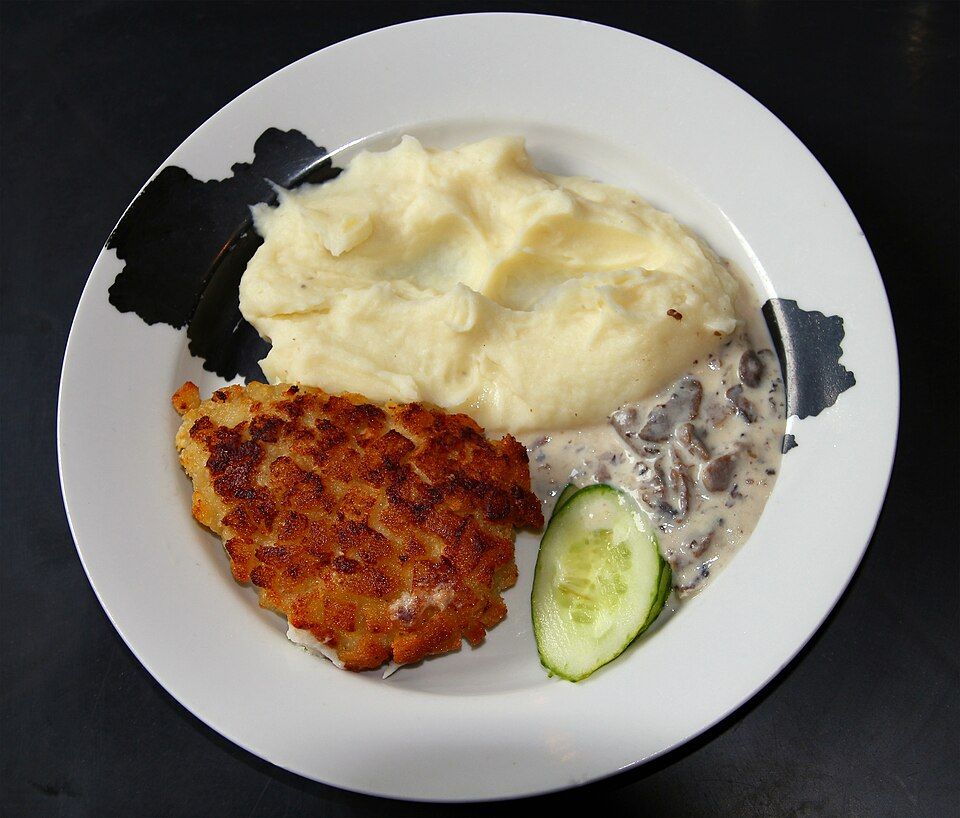
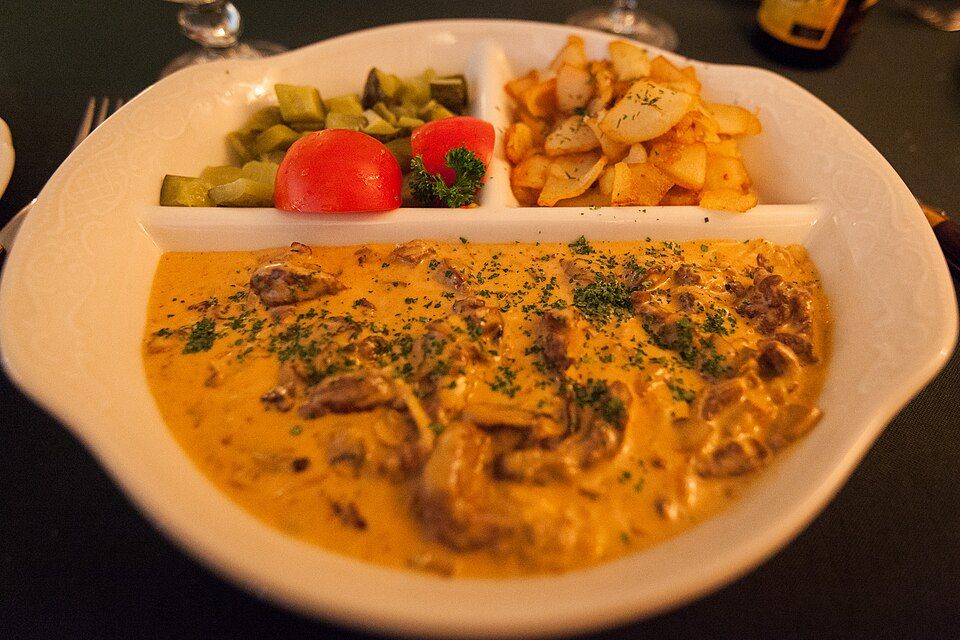
Dishes that carry the name of a person, a family or a place.


How the book is organized
Chapters and sections, sized by recipe count. Explore all chapters
- Other sections in Doughs 46
- Cold and Hot Drinks 36
- Buns, Pretzels, Easter Cakes and Other Baked Goods 22
- Fillings for Pies, Piroshki, Kulebyakas and Vatrushki 21
- Dishes for Liver Diseases 24
- Dishes for Diseases of the Heart, Kidneys, and for Hypertension 24
- Other sections in Diet 21
- Dishes for Patients with Obesity, Diabetes Mellitus 20
- Dishes for Stomach Patients 19
- Dishes for Intestinal Disorders 16
- Other sections in Soups 63
- Dressed Soups 45
- Other sections in Appetizers 53
- Salads 28
- Meat 79
- Boiled Vegetables 22
- Other sections in Vegetables 19
- Fried Vegetables 15
- Stewed Vegetables 13
- Stuffed Vegetables 10
- Milk Porridges 30
- Kashas 21
- Dishes from Beans, Peas, Lentils 12
- Puddings and Other Sweet Dishes 17
- Other sections in Sweets 15
- Compotes 12
- Jellies and Mousses 10
- Kisels 9
- Fish 41
- Jam 26
- Other sections in Preserves 14
- Other sections in Milk & eggs 18
- Dairy Dishes 15
- Poultry 26
- For children 21
- Other sections in Doughs
- Doughs › Cold and Hot Drinks
- Doughs › Buns, Pretzels, Easter Cakes and Other Baked Goods
- Doughs › Fillings for Pies, Piroshki, Kulebyakas and Vatrushki
- Diet › Dishes for Liver Diseases
- Diet › Dishes for Diseases of the Heart, Kidneys, and for Hypertension
- Other sections in Diet
- Diet › Dishes for Patients with Obesity, Diabetes Mellitus
- Diet › Dishes for Stomach Patients
- Diet › Dishes for Intestinal Disorders
- Other sections in Soups
- Soups › Dressed Soups
- Other sections in Appetizers
- Appetizers › Salads
- Meat
- Vegetables › Boiled Vegetables
- Other sections in Vegetables
- Vegetables › Fried Vegetables
- Vegetables › Stewed Vegetables
- Vegetables › Stuffed Vegetables
- Grains › Milk Porridges
- Grains › Kashas
- Grains › Dishes from Beans, Peas, Lentils
- Sweets › Puddings and Other Sweet Dishes
- Other sections in Sweets
- Sweets › Compotes
- Sweets › Jellies and Mousses
- Sweets › Kisels
- Fish
- Preserves › Jam
- Other sections in Preserves
- Other sections in Milk & eggs
- Milk & eggs › Dairy Dishes
- Poultry
- For children